It is so important for kids to understand that they are important in the classroom, and that their voice matters. That is why I love the idea of teachers being "coaches". We are the best kind of coach too, a life coach. It is our job to make sure our students learn to the best of their ability, and ultimately are able to stand on their own without our "coaching".
One aspect of learning is word recognition coaching. Clark specifically tells us to encourage open discussion and questioning from the class. I think it is important for students to "discover" knowledge rather than be boringly told what they need to know. Discovery encourages deep thought and questioning that will lead to a lifelong love of inquiry, and much more likely for students to remember what they learn.
One of the biggest lessons Clark discusses is Word Recognition. A few options for practicing sight words are:
You can use something similar to this to practice sight words while crossing over to math skills.
You could have kids get in small groups or do this at stations to practice the words themselves.
I think one of the most important parts of word recognition is moderation. Focusing all of your attention on word recognition skills would ignore other important aspects of literacy. I think highly common words are important, but decoding and independent reading skills should be more heavily focused.
What do you think? Do you think word recognition exercises are one of the most important aspects for kids learning to read? Do you think there is a way for us to make word recognition exercises more than a worksheet, but more of a discovery?
I am so happy to be learning instructional tools for phonemic awareness and reading this week! As the IRA/NAEYC explains, it is so important for us to excite kids and give them the appropriate tools to become exceptional readers. Whether it be independent reading time, read alouds, or small groups, having a clear plan to encourage literacy is the most important aspect of teaching children. Reading reaches into every aspect of our lives.
"Communications that in the past were verbal (by phone or in person) now demand reading and writing—messages sent by electronic mail, Internet, or facsimile as well as print documents."
I really love Yopp & Yopp's suggestions for integrating phonemic principles into our curriculum. Activities that focus on rhyme: The Hungry Thing book. I love this idea! I also think you could incorporate other books such as llama llama Red Pajama, Dr. Suess, Moose on the Loose...well, really any rhyming book! You could easily design projects and fun activities around rhyming books that everyone loves!
Another rhyming idea I love that wasn't mentioned in the article is The Name Game. I'm sure most of us have heard it before. It is a fun song, and after listening to it you can go around the room having kids sing the song rhyming all of their classmates names. Really, any rhyming song like "Down By the Bay" or "The Saint's go Marching in" would be fun for kids.
Activities for syllable manipulation:
The article gave a few suggestions, but something I found really interesting is using the "Day-O" song to clap out syllables. I also really liked the idea of using kids' names to group them by syllables. I think you could do this with any combination of words and make it based on the students interests too.
Activities with onset-rime manipulation:
My favorite activity here was the We're Going on a Bear Hunt. It is a classic.
Activities with phoneme manipulation:
I really like the "find your partners" game, and being a huge fan of reading aloud, of course I like the book option. I think you could find a number of interesting books to show this.
"I was not going to look at my five-year olds as non-readers; I wanted to empower children with the knowledge that they were already readers, and I would move them forward from there."
- Donna Bell in "Letting Go of 'Letter of the Week'"
I really enjoyed the article concerning reading, writing, and taking the focus off "letter of the week" programs. I feel that authenticity is important when teaching children. Kids are smart, and they absorb information quickly, and as such we need to treat them like they are intelligent.
It is so important to validate their reading and writings to make them feel important and useful. That is why I loved the article, which validates giving students more freedom in the classroom to read and write. I especially loved when Donna Jarvis talked about letting kids write how they want, and then letting them edit their work to improve themselves and their writing. I loved the ideas she put forth for having a fun and interactive classroom where kids are discovering not memorizing.
I feel like much of this week's reading focussed on outside influences for reading. Allington and Cunningham focussed on children's experiences learning to read outside the classroom. Ideas such as pretend reading, the Alphabet song, and anchored word learning came up often. I can't do much to control how a child learns at home, and more importantly how much they have learned before they enter my kindergarten or first grade classroom. However, I think that considering how a child has learned at home is important to gear how the will best learn at school.
I really liked some of the ideas that were given, specifically the "being the alphabet" game where students are given random letters of the alphabet when they line up, and they must arrange themselves in the correct order. I think an activity like this encourages group collaboration and is a fun way for kids to work with letters.
I also like the idea of anchored word picture books. Making an anchored word book to learn letters which students can look at during independent reading time is a great idea! However, I think I would take it a step further by having my students draw or create their own picture book for each letter. That way, they have their own book to take home and look at and they will remember the letters because they know what they drew. I think it makes it creative and fun for the students too.
I think that this chapter mainly gave the key elements for teaching reading.
Allow pretend reading and writing, even if it is wrong because it will foster excitement for learning those concepts. Provide a multitude of writing media (pads, colored paper, chalkboard, index cards, ect) to gain excitement about "real world" writing.
Model writing for them so they can see what they need to imitate
Teach concrete words in a creative way (using their names or cereal boxes, restaurant menus, animals, ect)
I think I am most excited about teaching rhyming. I really love to read aloud, and I love the classic rhyming books and nursery rhymes. One of my favorite books is Where the Sidewalk Ends by Shell Silverstein, and I have always loved Dr. Suess.
As I was doing my Personal History for reading, I learned a lot about myself and my outlook as a reading teacher. I have grown up an enthusiastic reader, and I want to instill that same love of reading into my students. This chapter focuses on methods to excite and involve kids in Independent reading.
One of the most important aspects of reading education is assessing your students view on reading as a whole. One suggestion is giving the kids a status check, asking them about their feelings toward books, their favorite books, and more. While I like being able to see progress throughout the year, I would be wary of making kids feel like their being tested over their enjoyment of reading.
Another important aspect of reading is teacher Read-Alouds. I was always read to as a young child, and I remember being very excited about my teachers reading in our classrooms. I found it interesting that females prefer fiction while males prefer information books. I really think it is important to read a variety of materials from all different genres as well as offering these different types to kids for independent reading time. I also think it is necessary to encourage parents to read aloud to their kids as well at home. Not only does this give kids more opportunities to read and hear more words, but also the encouragement from parents is a huge factor in success at school. I also think that reading books in a series or an author with more books is a great idea. It makes sense that kids want to read the books that their teacher reads, and giving them other materials similar to the read aloud is a great way to get them excited about reading. In order to keep a balanced and interesting read aloud schedule, I think it is important for teachers to plan their readings for the year and keep a record of what they read. I also think that it is a great idea to journal about the experiences during the read aloud sessions and what books kids particularly enjoyed. I really like the idea of having a "book wall" in which kids can rate how well they like or didn't like a book. I think it would give me feedback on what they enjoy and what's working while giving my kids a chance to express themselves. Another great way to encourage reading is the Buddy System. When a child is falling behind in reading, they often don't want to be seen reading "baby books". In order to keep them reading at their level, and hopefully get them to move forward, introducing a Buddy System seems like a great option. I think getting them to read to kindergarten kids is a great way to 1) motivate them to read more at their level and 2) set a good example for the little kids on how fun reading can be! One of the most important parts of creating good independent readers is giving them time to read independently in class. Allowing kids to choose the books they want to read and giving them ample time to read them is key to getting kids excited about books. I learned about the "no wandering" rule, and I found it very interesting. It makes sense that when kids wander around looking for a books 1) they aren't reading themselves and 2)they are distracting others who are trying to read. I really liked the idea of the "book crates" system with other teachers. As a new and young teacher, it is hard to have an extensively large library that will interest and keep up with my students all year long. As my career continues, I do want a large classroom library, but it is hard to buy a large amount of books at the beginning. I think the book crates system makes a much larger selection of books for the classroom while creating excitement for students. Another interesting subject I learned was Independent Reading Conferences. The idea is to give the kids a chance to share their favorite parts of the books they are reading while assessing how the are improving, encourage their interests, and help them pick out new books to read. It is important not to make it feel like an interrogation, and keep a positive attitude. The idea is to put the responsibility of preparing for the conferences on the students. The books gives me these kind of instructions for students to complete before conferences each week:
Choose the book or magazine you want to share.
Pick a part to read to me and practice this part.
Write the title and page number on a bookmark and put the bookmark in the right place.
Think about what you want to talk to me about. Some possibilities are:
What you like about this book
Why you chose to read this part to me
What you think will happen (if you haven't finished the book)
What you are thinking about sharing with me next week
All grade levels require reading and writing skills, and creating a foundation for those skills is especially important at the elementary level. I want to foster a love for learning, and a love for reading in my classroom. I always knew it was important to be enthusiastic and inclusive in reading and writing assignments, but I was surprised and intrigued by the research on high achieving classrooms. I was happy to find that classroom's which emphasized balance did particularly well. Not only one program works, but a combination of many programs tailors to your classrooms needs. I believe this ideology empowers teachers to create classrooms that will work for their students while keeping their workload passionate and interesting.
Michael Knapp's study in 1995 showed classrooms "with the highest achievement gains" included:
Teachers who emphasized higher-order meaning construction more than lower-order skills
Teachers who maximized opportunities to read
Integrated reading and writing with other subject areas
Provided opportunities to discuss what was read
I really appreciate the idea of emphasized higher-order meaning over low-order skills. Basically, this means that these teachers focused on how to reach on answer or how to solve a problem rather than
simple getting the correct answer. I believe it is important for students to know how to problem solve so that they can use those skills in other areas of their life as well. It sort of reminds me of the saying, "Give a man a fish and you feed him for a day; teach a man to fish and you feed him for a lifetime." If we just give our students the right answers without making them come to their own conclusions, we are teaching them for a day; not giving them the opportunity to learn for a lifetime.
Another observational research study led by Ruth Wharton-McDonald in 1998 showed more in-depth conclusions about classrooms which had unusually high achieving students. Some of the observations concluded that these teachers:
Integrated skills teaching with reading and writing.
There was never a mundane task, but every minute in class was used well and for instructional events.
Use lots of coaching, providing support but always trying to get the most out of every child.
Emphasize self-regulation and self-monitoring.
Reading and writing was also integrated into other areas, and teacher made many cross-curriculum connections.
High expectations for their children- both for learning and behavior.
Excellent classroom managers.
I agree with every aspect of this list, and believe that integrating these policies would be beneficial to both students and teachers in every classroom. I think that a key part to keeping these aspects in a classroom would require attention and reminding. If a teacher plans on keeping high expectations, not wasting time, and giving kids the ability to self regulate, then they must constantly integrate these ideals into their notes and plans. Furthermore, I think for managing behavior and self-monitoring, the best way to go is setting clear rules at the beginning of the year. By setting out specific rewards and punishments for behaviors and then following through on those rules, I could maintain high expectations for my students. I really like the idea of having a "stress" station where students who are frustrated or having trouble can go to calm down. I also really like the idea of have a way for students to reflect on their behavior and they can do to change it for next time.
Some other unique observations made by Wharton-Mcdonald in 2001 on effective classrooms include:
Books were everywhere and used in a variety of ways.
Children did a lot of reading throughout the day and for homework.
Classrooms were caring, positive, and cooperative environments, in which discipline issues were handled quickly and quietly.
Teachers used a variety of grouping structures, including whole class, one-to-one teaching, and a variety of small groups.
High student engagement.
I think the most important aspect of this is the balance of grouping structures. Using different groupings throughout the day allows for a more diverse learning experience. It allows students who learn different ways an opportunity to learn in a style best suited to them. Furthermore, it allows everyone in the class a change of pace so that they do not become bored or unresponsive. It keeps everyone interested and actively engaged in the lessons. I believe balance is the key to good classroom management.
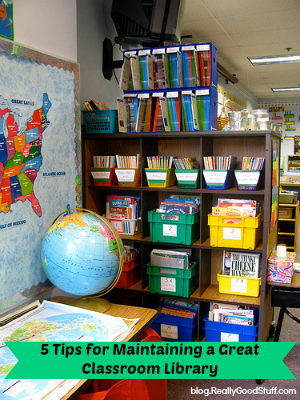
I also really like the idea of having a large classroom library. I think having books at their disposal will allow kids more opportunities to be introduced to books they will enjoy. Furthermore, a large classroom library gives incentives to students in their behavior and time management while hopefully fostering a love for reading at a young age.
A really interesting idea I learned was the five categories for reading development: Letter-sound, oral language, anchored word reading, and writing. The text explained that while it is accepted that children need to develop phonemic awareness and phonics skills to become successful, ignoring meaning vocabulary can cause comprehension deficits in the future (Allyn, 6).
Meaning Vocabulary: the number of words students have meanings for in their speaking and listening vocabularies.
What I also found fascinating was the idea of anchored word reading. The idea is that a teacher will print out new or unfamiliar words on note cards, which she points to as she reads them in a text. The students will then actively engage with the notes cards, talk about what the word means, and learn how to say it themselves. By actively engaging the students when learning the new word, they add them to their oral vocabularies.
Another interesting framework is the Four Blocks organizational literacy structure. The idea is that instructional time is divided into four blocks: a Words Block (sight words, fluency, phonics, and spelling), Guided Reading Block (comprehension strategies for story and informational text and building prior knowledge and vocabulary), Writing Block (both process writing and focused writing), and a Self-Selected Reading Block (teacher read-alouds and independent reading). The research shows that of the six schools who implemented it, all did better than expected on their states' literacy exams. This video goes into more depth about the Four Blocks program:
I think overall the most important part of any classroom is balance. Many of the programs and ideas explored here are great to integrate into classrooms, but it is ultimately the teacher who needs to decide what parts to include in their classroom. I think the research and tools provided in this chapter are invaluable for giving teachers the insight to create a class atmosphere that encourages reading and writing.