Michael Knapp's study in 1995 showed classrooms "with the highest achievement gains" included:
- Teachers who emphasized higher-order meaning construction more than lower-order skills
- Teachers who maximized opportunities to read
- Integrated reading and writing with other subject areas
- Provided opportunities to discuss what was read

Another observational research study led by Ruth Wharton-McDonald in 1998 showed more in-depth conclusions about classrooms which had unusually high achieving students. Some of the observations concluded that these teachers:
- Integrated skills teaching with reading and writing.
- There was never a mundane task, but every minute in class was used well and for instructional events.
- Use lots of coaching, providing support but always trying to get the most out of every child.
- Emphasize self-regulation and self-monitoring.
- Reading and writing was also integrated into other areas, and teacher made many cross-curriculum connections.
- High expectations for their children- both for learning and behavior.
- Excellent classroom managers.

Some other unique observations made by Wharton-Mcdonald in 2001 on effective classrooms include:
- Books were everywhere and used in a variety of ways.
- Children did a lot of reading throughout the day and for homework.
- Classrooms were caring, positive, and cooperative environments, in which discipline issues were handled quickly and quietly.
- Teachers used a variety of grouping structures, including whole class, one-to-one teaching, and a variety of small groups.
- High student engagement.
I think the most important aspect of this is the balance of grouping structures. Using different groupings throughout the day allows for a more diverse learning experience. It allows students who learn different ways an opportunity to learn in a style best suited to them. Furthermore, it allows everyone in the class a change of pace so that they do not become bored or unresponsive. It keeps everyone interested and actively engaged in the lessons. I believe balance is the key to good classroom management.
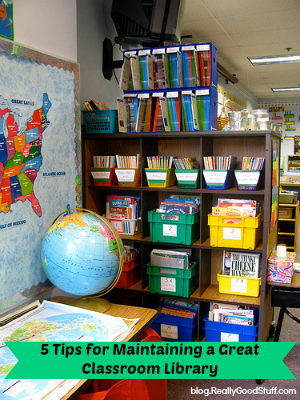
I also really like the idea of having a large classroom library. I think having books at their disposal will allow kids more opportunities to be introduced to books they will enjoy. Furthermore, a large classroom library gives incentives to students in their behavior and time management while hopefully fostering a love for reading at a young age.
A really interesting idea I learned was the five categories for reading development: Letter-sound, oral language, anchored word reading, and writing. The text explained that while it is accepted that children need to develop phonemic awareness and phonics skills to become successful, ignoring meaning vocabulary can cause comprehension deficits in the future (Allyn, 6).
Meaning Vocabulary: the number of words students have meanings for in their speaking and listening vocabularies.
What I also found fascinating was the idea of anchored word reading. The idea is that a teacher will print out new or unfamiliar words on note cards, which she points to as she reads them in a text. The students will then actively engage with the notes cards, talk about what the word means, and learn how to say it themselves. By actively engaging the students when learning the new word, they add them to their oral vocabularies.

Another interesting framework is the Four Blocks organizational literacy structure. The idea is that instructional time is divided into four blocks: a Words Block (sight words, fluency, phonics, and spelling), Guided Reading Block (comprehension strategies for story and informational text and building prior knowledge and vocabulary), Writing Block (both process writing and focused writing), and a Self-Selected Reading Block (teacher read-alouds and independent reading). The research shows that of the six schools who implemented it, all did better than expected on their states' literacy exams. This video goes into more depth about the Four Blocks program:
I think overall the most important part of any classroom is balance. Many of the programs and ideas explored here are great to integrate into classrooms, but it is ultimately the teacher who needs to decide what parts to include in their classroom. I think the research and tools provided in this chapter are invaluable for giving teachers the insight to create a class atmosphere that encourages reading and writing.

No comments:
Post a Comment